Northern Shaolin Seven-Star Praying Mantis
Northern Shaolin Seven-Star Praying Mantis uses the punches, palm strikes, grabs, locks, kicks and sweeps found in many other traditional Chinese martial arts. It is especially famous for its speed, continuous attacks and use of feints.
One of the distinguishing features of the style is the mantis hook. The application of the hook embodies the principles of yin and yang—soft and hard power. It can be used to divert the force of an incoming attack, enabling a person to defend against a stronger or larger opponent. Or it can be used to strike decisively to sensitive areas of the body, including various pressure points.
Its training develops body and mind together—power with sensitivity, decisiveness with awareness, intensity with stillness.
A path of study
Practitioner Program
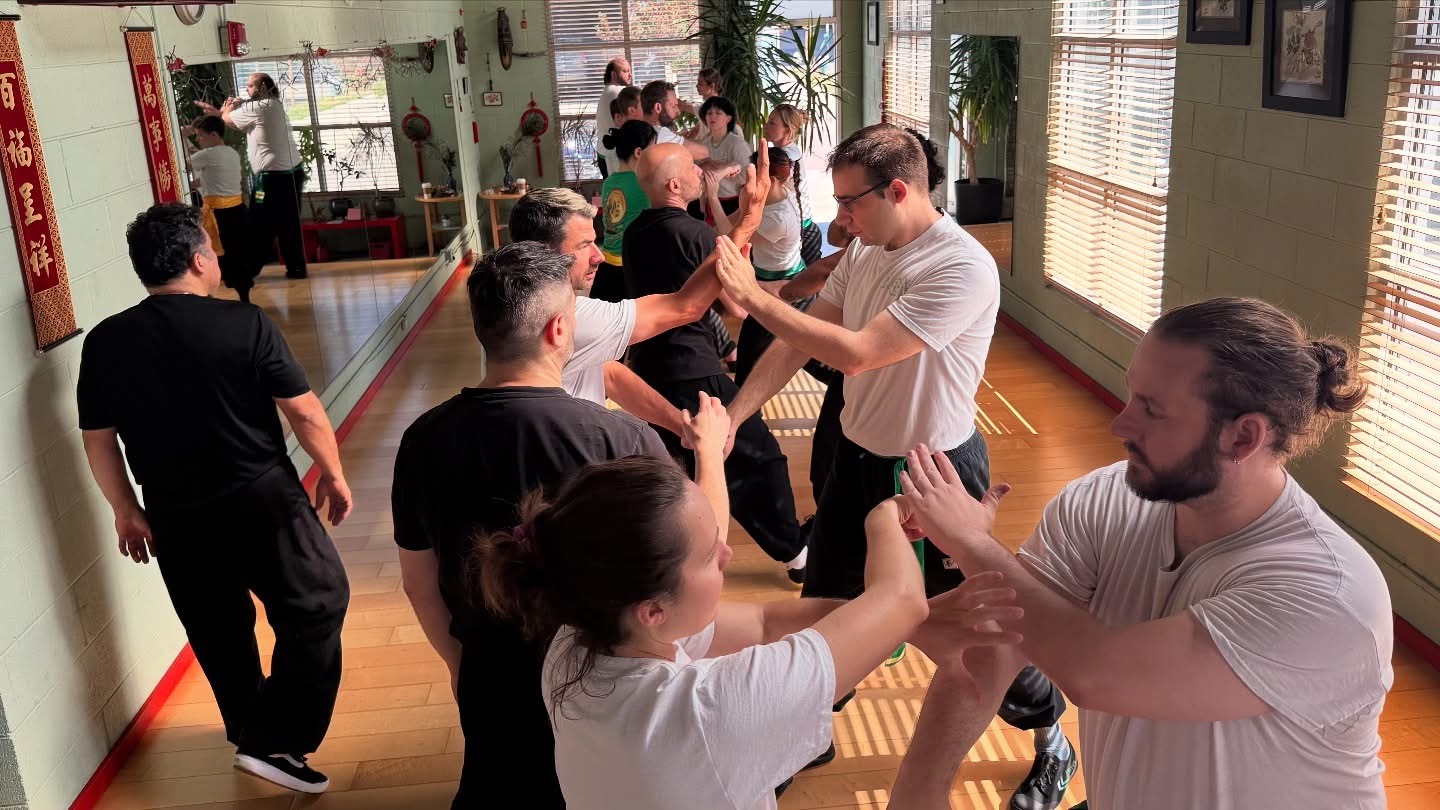
The Practitioner Program is geared toward individuals interested in more than just fighting. Students begin by stretching and conditioning the body through kung fu basics. They then progress through traditional forms (set sequences of martial movements), weapons, meditation, two-person fighting sets, sparring, chin na and practical applications for self-defense.
Unlike the Teacher Program, which takes an average of ten years to complete, the Practitioner Program is designed as an approximately three-year course of study.
Sample Practitioner Curriculum
The sample curriculum below illustrates the structure and range of the Practitioner Program. Each student’s training and progression reflect readiness, practice and demonstrated understanding.
| SASH | DURATION | TOTAL | FORMS |
| No Sash | 3 months | 3 months | Tan Tui Lines 1-6 (彈腿) 12 Characters Foundation Basics |
| Green Sash | 3 months | 6 months | Tan Tui Lines 7-12 (彈腿) Gong Li Quan (功力拳) Application of 12 Characters |
| Green Sash w/ Gold Stripe | 3 months | 9 months | 14 Roads 1-7 (十四路拳) Beng Bu (崩步拳) |
| Green Sash w/ 2 Gold Stripes | 3 months | 12 months | 14 Roads 8-14 (十四路拳) Hard Fist (躲剛拳) Line 1 of Beng Bu 2-person Set (Applications) |
| Green Sash w/ 3 Gold Stripes | 3 months | 15 months | 18 Elders (十八叟拳) 5th Son Staff (五郎八卦棍) Line 2 of Beng Bu 2-person Set (Applications) |
| Gold Sash | 6 months | 21 months | Black Tiger Crossing (黑虎交叉) Quick fist (节拳) Thrust Hammer (插捶拳) Line 3 of Beng Bu 2-person Set (Applications) |
| Gold Sash w/ Red Stripe | 6 months | 27 months | Plum Blossom Hand (梅花手) Da Fan Che Quan (大翻車) Eight Diagram Saber (八卦刀) Line 4 of Beng Bu 2-person Set (Applications) |
| Red Sash | 6 months | 33 months | White Ape Exiting the Cave (白猿出洞) Falling Plum Blossom (梅花路) Mantis Stepping Whirlabout (螳螂步旋) Five Tiger Spear (五虎枪) Lines 1-2 of Black Tiger Crossing 2-person Set (Applications) |
| Red Sash w/ White Stripe | 6 months | 39 months | White Gibbon Stealing the Peach (白猿偷桃) Soft and Agile Palm Boxing (柔靈掌) Big Tiger & Wild Goose Boxing (大虎雁) Double Daggers (双匕首) Lines 3-4 of Black Tiger Crossing 2-person Set (Applications) |
| White Sash |
A longer path
Teacher Program
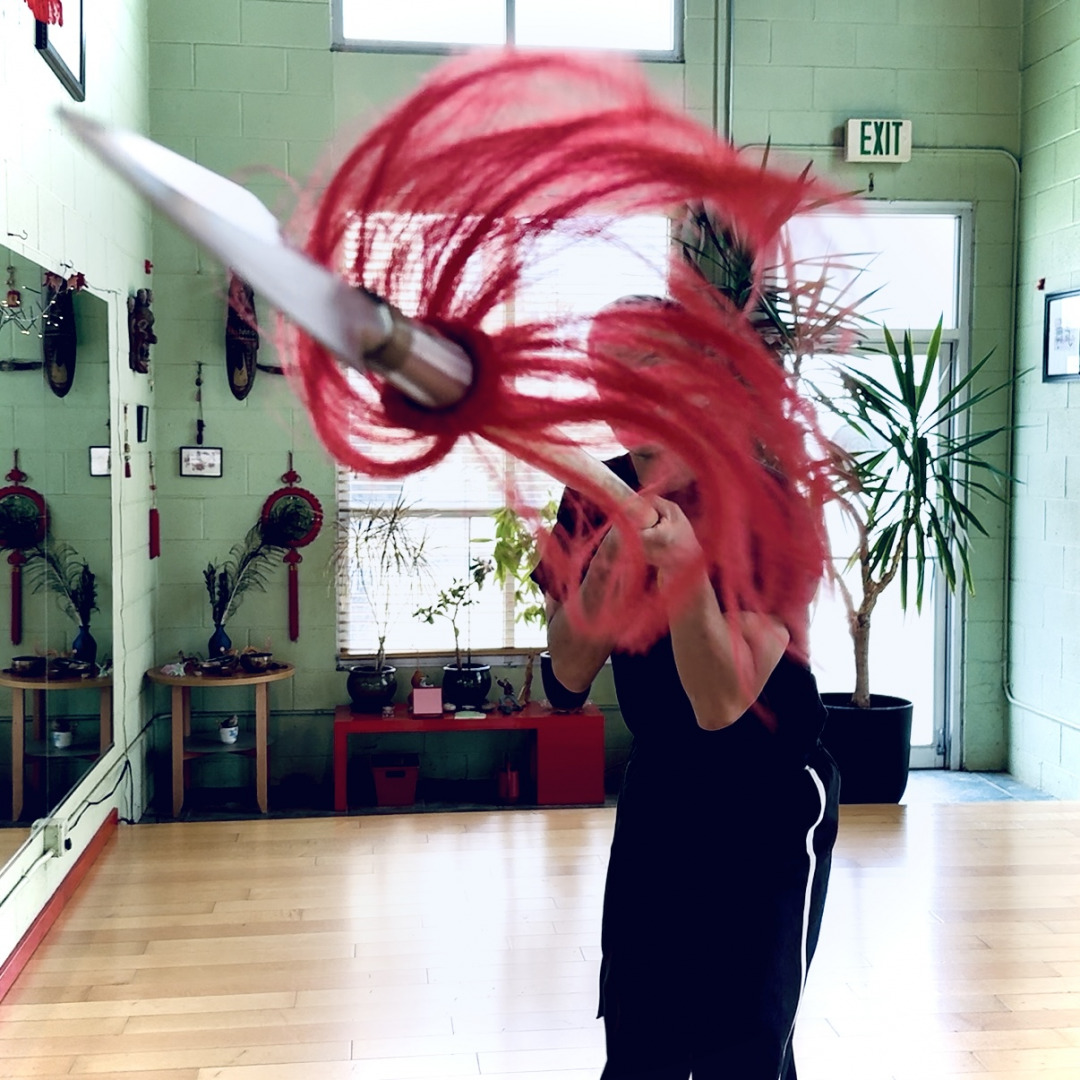
Like the Practitioner Program, the Teacher Program gives students a solid foundation in traditional Chinese martial arts, including empty-hand forms, weapons, meditation, conditioning exercises, bag work and practical applications for self-defense. As students progress, they are introduced to additional traditional training methods such as Iron Sand Palm and the Eighteen Lohan, a form of martial qigong. They are also introduced to herbal medicine concepts for wellness.
The Teacher Program takes students further in their practice. They learn more complex forms, spar regularly, have opportunities to train with national and international masters, travel to represent the school in competitions, mentor less-experienced students and eventually learn to lead classes. Most importantly, they become lineage holders.
The Teacher Program is reserved for the Academy’s most devoted students. It takes an average of ten years to complete, follows a different sash-ranking and testing structure, and is offered by invitation only.
Interested in training?
Begin with an observation.
Prospective students begin by requesting an observation. Sifu Wang reviews each request and, when appropriate, schedules a time to speak and meet. The meeting may include observing part of a regular class.